- BPA-free means a product doesn't contain BPA, but it doesn't automatically guarantee overall safety.
- Some BPA alternatives, including BPS and BPF, are still being studied for potential health effects.
- The FDA and European regulators have reached different conclusions about BPA exposure.
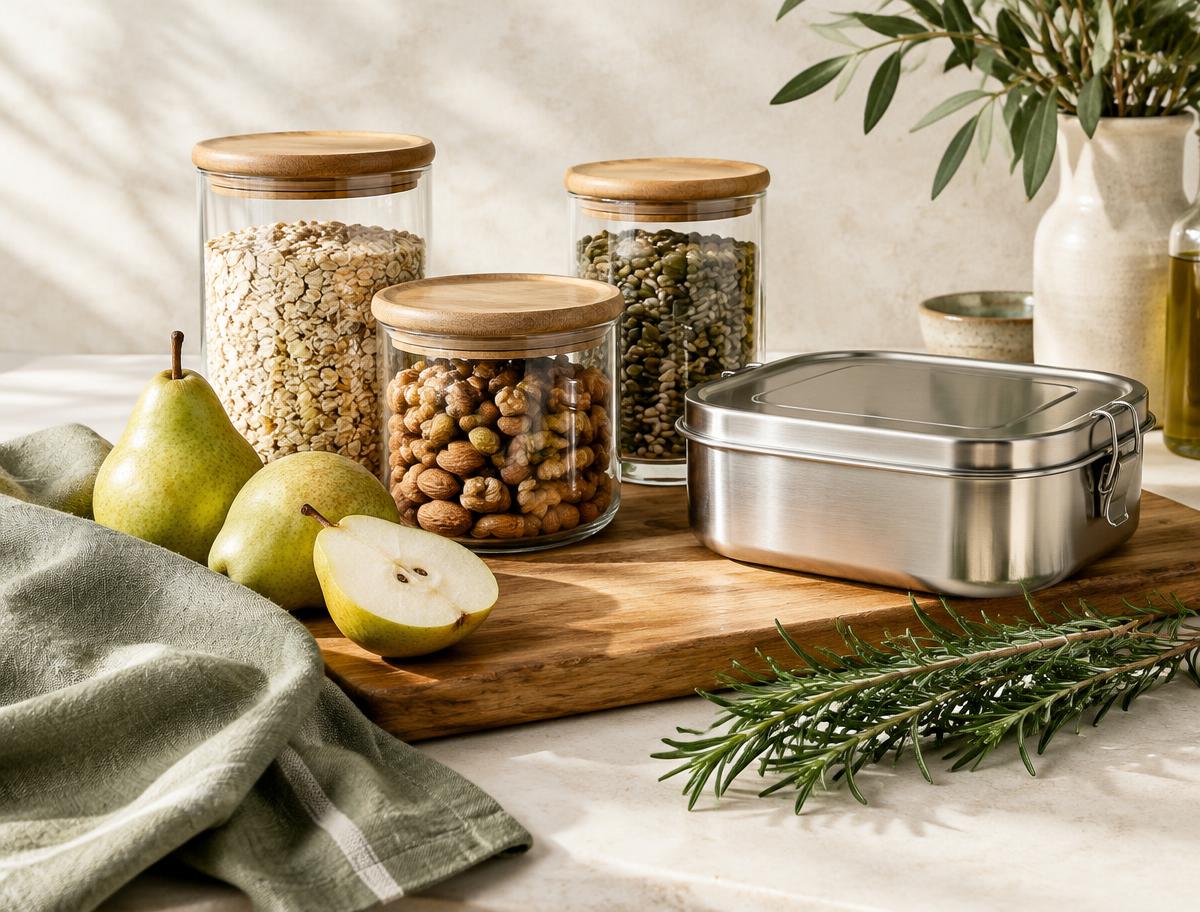
- Glass and stainless steel are practical alternatives for food storage.
- You don't need to replace everything at once to make thoughtful choices.
#
As a mom, I know how easy it is to start questioning everyday products once you begin paying closer attention to what your family uses.
You see labels like BPA-free, non-toxic, and food-safe, and naturally, you want to know whether you're making a good choice.
But one thing I've learned about low-tox living is that a reassuring label doesn't always tell the whole story.
So, is BPA-free plastic actually safer?
The short answer: BPA-free means a product is made without BPA, but it doesn't automatically mean the entire product is safer.
And before you start mentally replacing every plastic container in your kitchen, I want to explain what that actually means, what researchers have found, and which swaps may be worth considering.
First, what exactly is BPA?
BPA stands for bisphenol A, a chemical used to manufacture certain plastics and resins.
It's historically been found in materials such as:
- Some hard, clear plastic food containers
- Certain reusable bottles
- Protective coatings inside some food and beverage cans
BPA can migrate from some food-contact materials into food or beverages. Scientists have studied it extensively because it can interact with hormone-related biological systems.
But something important to understand is that a chemical's ability to cause an effect doesn't tell us, by itself, whether a particular everyday exposure will cause harm.
The amount of exposure, how it occurs, and the quality of the evidence all matter.
Why are scientists concerned about BPA?
BPA has been studied for its potential effects on the endocrine system, which helps regulate hormones throughout the body.
Researchers have investigated possible relationships between BPA exposure and reproductive, developmental, metabolic, and immune-system outcomes.
However, scientists and regulatory agencies don't all interpret the evidence in exactly the same way.
The U.S. Food and Drug Administration maintains that BPA is safe at the levels currently occurring in foods from authorized food-contact uses. [1]
The European Food Safety Authority reached a different conclusion in its 2023 reassessment, identifying concerns about effects on the immune system and establishing a substantially lower tolerable daily intake. [2]
The European Union subsequently adopted a prohibition on BPA in many food-contact materials, with specific exceptions and transition rules. [3]
That doesn't mean a European ban proves every BPA-containing item will harm your family. It means regulators assessed the available evidence and reached different judgments about acceptable exposure.
And that's exactly why I don't think a single product label should replace understanding the research.
The part that surprised me about BPA-free labels
When a manufacturer removes BPA, it still needs to make the product from something.
Some BPA-free products use different materials altogether. Others may use alternative bisphenols, including:
- BPS — Bisphenol S
- BPF — Bisphenol F
Researchers have investigated these substitutes because some studies suggest they can have biological effects similar to BPA under certain conditions. [4]
For example, a 2024 laboratory study examined how BPA, BPS, and BPF affected human endometrial cells. Findings like these raise reasonable questions about replacement chemicals, but they don't establish that ordinary use of every BPA-free container causes reproductive harm. [4]
So here's what I want other moms to understand:
BPA-free is useful information, but it isn't a complete safety assessment.
A product could be BPA-free and still warrant questions about its other ingredients, durability, intended use, or manufacturing standards.
On the other hand, being made from plastic doesn't automatically make a product unsafe.
Does that mean we should stop using plastic?
Not necessarily.
I'm not interested in telling moms they need to throw away everything they own to create a healthier home.
Plastic can be lightweight, affordable, practical, and especially useful in situations where glass could break.
But when it comes to storing and reheating food, there are alternatives worth considering.
Glass food storage containers
Glass can be a practical choice for leftovers and food storage, especially when you want containers suitable for reheating.
Look for products designed for the temperatures you intend to use, and remember that some glass containers have plastic lids.
Stainless-steel containers
Food-grade stainless steel is another option, particularly for water bottles, lunch containers, and on-the-go snacks.
It's durable and doesn't shatter like glass, although not every stainless-steel product is suitable for heating food.
Plastic containers
If you're continuing to use plastic, follow the manufacturer's instructions for heating, washing, and food storage.
Replace containers that are cracked or deteriorating, and don't assume every container is microwave-safe.
The goal isn't to find one perfect material for everything. It's to choose products that are appropriate for how your family actually uses them.
What would I prioritize on a budget?
Here's how I'd approach it if I were just getting started.
1. Start with how you're reheating food.
If you're already shopping for a replacement, consider a microwave-safe glass container or another suitable nonplastic option.
2. Don't throw away perfectly functional containers out of fear.
You can make gradual changes as things wear out or as your budget allows.
3. Look beyond the front label.
Instead of relying only on "BPA-free," look at the actual material, intended use, and care instructions.
4. Make your next purchase intentional.
If you're buying new lunch containers, food storage, or reusable bottles anyway, compare glass, stainless steel, and plastic based on your family's needs.
And remember: these are practical ways to change the materials you're using, not a promise that buying new containers will prevent a particular health condition.
The Crunchy Verdict: Is BPA-free plastic worth trusting?
Here's my takeaway after looking at the research.
Is BPA-free automatically safer? Not necessarily. The label only addresses BPA and doesn't establish the safety of every other substance or material in the product.
Should you panic about plastic? No. Not every plastic product or exposure carries the same risks.
Are glass and stainless steel good alternatives? They can be, particularly when you're purchasing new food storage products.
Should you replace your entire kitchen? I wouldn't recommend it based on a BPA-free label alone.
For me, low-tox living isn't about becoming afraid of everything around us.
It's about asking better questions, understanding what the evidence actually says, and making thoughtful choices that work for our families.
Some swaps might make sense for you right now. Others can wait.
And some things might not need replacing at all.
Progress over perfection. Always.
Looking for practical kitchen swaps?
If you're ready to explore alternatives, I've put together kitchen recommendations organized to make shopping a little easier
Explore My Low-Tox Kitchen Swaps
And if you're completely new to low-tox living, start with my free beginner's guide. It walks you through realistic changes without the pressure to replace everything at once.
References & further reading
- [1] U.S. Food and Drug Administration. Bisphenol A (BPA): Use in Food Contact Applications.
- https://www.fda.gov/food/food-additives-ingredients/bisphenol-bpa-use-food-contact-application
- [2] European Food Safety Authority. Re-evaluation of the risks to public health related to the presence of bisphenol A (BPA) in foodstuffs. 2023.
- https://www.efsa.europa.eu/en/plain-language-summary/re-evaluation-risks-public-health-related-presence-bisphenol-bpa-foodstuffs
- [3] European Commission. Commission Regulation (EU) 2024/3190, consolidated version.
- https://eur-lex.europa.eu/eli/reg/2024/3190
- [4] BPA-free? Exploring the reproductive toxicity of BPA substitutes BPS and BPF on endometrial decidualization. 2024. PubMed.
- https://pubmed.ncbi.nlm.nih.gov/39536566/
- Educational content only. Not individualized medical advice. Some recommendations may contain affiliate links. As an Amazon Associate, I earn from qualifying purchases.
A note from the mama behind the guide
We’re learning as we go, one swap at a time. Keep asking questions and choose what works for your family.
Explore related shopping resources